PeaceTech Alliance – Connecting Peacebuilders and Technology
One thing is certain: Humanity’s great dream of a peaceful world – an end of history – feels as distant today as it did at the time of the Second World War. The International Committee of the Red Cross identified no fewer than 120 armed conflicts worldwide last year, involving more than 60 states and 120 non-state armed groups. Since the 1990s, the number of violent conflicts has steadily increased. Key drivers are the continuous emergence of groups pursuing their own interests and, more broadly, the fact that conflict-affected regions become fertile ground for the spread of further violence.
While Russia's war of aggression against Ukraine at the gateway to Europe and the escalation of the Middle East conflict following Hamas's terrorist attack on Israel are omnipresent in the media landscape, the war in Sudan and the wars between state armed forces and jihadists in Burkina Faso, Nigeria, and Somalia are taking place under the radar of the Western world.
This alarming situation, with various hostilities in all parts of the globe, is matched in the civilized world by a no less enormous array of peacekeeping missions. According to the Center for International Peace Operations (ZIF), around 116,000 people are currently deployed in crisis areas worldwide. At present, the United Nations (UN) alone, whose central purpose is to secure world peace, maintains twelve missions, the oldest of which, the United Nations Truce Supervision Organization (UNTSO), has been in existence since 1948 to monitor the ceasefire in the Middle East through military observers.
Peacebuilding – the Wide Range of Conflict Resolution Mechanisms
The concept of “peacebuilding”, originally coined by peace researcher Johan Galtung in 1976, refers to the full range of measures that help prevent, resolve, and transform violent conflict: “We need holistic mechanisms for conflict resolution, structures that eliminate the causes of war and offer alternatives to war for dangerous relations between nations and groups.”
It was under Secretary-General Boutros Boutros-Ghali in 1992, in response to the report “An Agenda for Peace” published that same year, that the UN took on responsibility for peacebuilding as a global mandate. In the course of further reflection on this globally significant topic, over the decades, focused science (keyword: peace research) and the international aid industry entered the peacebuilding arena as new stakeholders alongside the UN, albeit with different conceptual focuses.
An example of a scientific position can be found in the definition provided by the Kroc Institute for International Peace Studies at the University of Notre Dame, a world-leading center for conflict research and strategy development for sustainable peace: "Peacebuilding means the development of personnel and group relationships as well as political relationships across ethical, religious, class, national, and racial boundaries. Peacebuilding attempts to resolve injustices in a non-violent manner and to transform the structural conditions that trigger deadly conflicts. Peacebuilding can include conflict prevention, conflict management, conflict resolution and transformation, and post-conflict reconciliation."
The UN approach, codified by the Secretary-General's Committee in 2007, defines peacebuilding as a comprehensive set of measures aimed at reducing the risk of slipping or sliding back into conflict by strengthening national capacities at all levels of conflict management.
With NGOs, such as the Organization for Economic Co-operation and Development (OECD) and the United States Institute for Peace (USIP), also taking up the issue, the range of possible peacebuilding measures has become more visible to society: humanitarian aid, protection of human rights, provision of security, establishment of non-violent forms of conflict resolution, strengthening of reconciliation offers, provision of healing mechanisms for trauma suffered, repatriation of refugees and resettlement of displaced persons, creation of broad educational opportunities, and economic reconstruction of destroyed vital infrastructure.
The war in Ukraine, which has been ongoing since February 24, 2022, gives an idea of the infrastructural devastation and the calculated reconstruction costs. According to The Economist, the total damage to infrastructure amounts to US$155 billion, which is almost equal to the current GDP of this large country in Eastern Europe. Since the invasion began, 18 airports, 350 bridges and overpasses, 25,000 km of motorway, and more than 250,000 residential units, mainly in the contested areas, have been destroyed. Another huge problem resulting from the war is the exodus of the Ukrainian population. According to the United Nations High Commissioner for Refugees (UNHCR), 10 million Ukrainians have left their country, with 6.45 million having settled in other European countries.
In its statement on the proposed “Global Europe” regulation of September 2025, the European Peacebuilding Liaison Office (EPLO) called on the EU to continue funding conflict prevention and peacebuilding beyond 2027. “Conflict prevention is not only a moral imperative, but also a strategic and economic necessity.” To this end, figures from the Institute for Economic and Peace's Global Peace Index 2025 were published: "The cost of violence in 2024 was around €17 trillion. This is equivalent to 11.6% of total global economic output or €2,090 for every citizen of the world. Today's conflicts disrupt important global supply chains, uproot 123 million people, exacerbate the effects of the climate crisis, and create conditions for an increase in transnational crime and armed groups. The UN and the World Bank, in turn, have calculated that every Euro invested in peacebuilding saves around €16 in conflict costs."
PeaceTech – Peacebuilding with Digital Technologies
The term PeaceTech was already in use in the 2000s to describe how new digitalization and IT systems could potentially contribute to peacekeeping. With this in mind, the Peace Innovation Lab Stanford began conducting scientific research into the intersection of technology and peace in the 2000s. The British Council offers a good definition of the term PeaceTech: “It is used to describe the use of information and communication technologies and other technologies that have a positive impact on peace.” At the heart of PeaceTech initiatives is the collaborative aspect, namely the coming together of professionals from the fields of information technology, computer science, engineering, telecommunications, informatics, and design with activists, NGOs, and other social actors to jointly develop tools that can be used to address political and social issues.
The Austrian Way – Human-Centered PeaceTech for Field Work
As a technology used for peace and conflict resolution, PeaceTech is not an end in itself, but must first and foremost be designed in such a way that the solutions developed are tailored to the requirements of peace missions in different deployment scenarios.
That is why the Center for Digital Safety & Security at the AIT Austrian Institute of Technology, together with partners, launched the PeaceTech Alliance at the International Digital Security Forum (IDSF) Vienna in June 2025.
The initiative focuses on three areas: (1) “building communities” by establishing interdisciplinary research and through continuous dialogue between natural scientists, social scientists, humanities scholars, and technical experts with government and civil society peacebuilding initiatives; (2) “easy access to digital technologies” based on open source and jointly designed proof-of-concept projects, often in low-tech versions with a low application threshold for peace actors, and (3) “founding a platform” for building appropriate networks and for ongoing knowledge exchange to promote a sustainable culture of peace through joint projects. It is also particularly important to the PeaceTech Alliance to redefine the narrative for peacebuilding and thus convince political decision-makers and regulatory authorities to actively promote responsible technological progress for sustainable peace.
Peacekeeping and peacebuilding are humanistic activities that are often carried out in unstable and precarious environments with severely damaged infrastructure, frequently at risk to the peacebuilders' own safety. In order for missions to fulfill their core tasks of building functioning communities through confidence-building measures and thus restoring the rule of law and protecting the civilian population, peacekeepers need to be involved in technology development in multiple ways.
For this newsletter, I was able to recruit Nathan Coyle, open data expert and co-founder of the PeaceTech Alliance, and Astrid Holzinger from the Austrian Center for Peace. In their essay “PeaceTech: Austrian-Made Technology that Serves Peace”, they describe the unique Austrian approach to the development and use of PeaceTech, with peacemakers at its heart.
It only remains for me, as the editor of the newsletter, to wish all subscribers and readers an interesting read with as many new insights as possible on a topic that is particularly relevant at the present time.
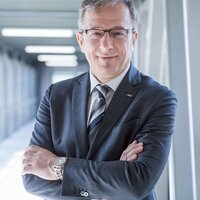
Head of Center for Digital Safety & Security
AIT Austrian Institute of Technology GmbH
Die deutsche Version dieses Texts finden Sie hier.

 mehr erfahren