
About Us
As a modern and independent industry platform, the OVE Austrian Electrotechnical Association offers networking opportunities to science and research, industry and commerce, the energy sector as well as users. It actively shapes the development of electrical engineering and information technology in times of digital change.
As an electrotechnical standardization organization and with its additional core activities in the fields of certification and lightning detection, the association officially represents Austrian interests in international bodies.


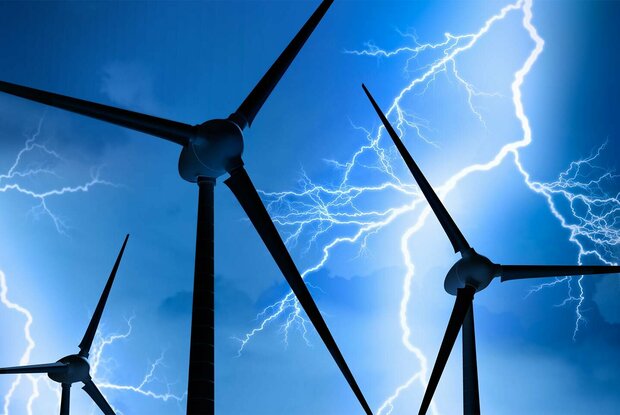
The core activities of electrotechnical standardization and certification are also instrumental in creating the general technological conditions needed to achieve energy transition and ensure the success of innovative technologies in all areas of digitalization and automation.
The association supports the implementation of new innovative technologies and promotes industry success with topic-related industry events as well as comprehensive development offers.
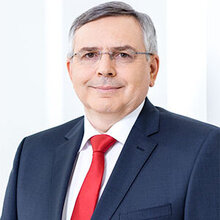
Members of the OVE benefit from contacts to national and international experts from all fields of electrotechnology, information technology and the energy sector. Using the platforms OVE Fem and OVE Young Engineers, the OVE bundles activities and the exchange of information for individual member groups, thus facilitating networking among them. OVE Fem is the platform for women in electrotechnology, information technology and the energy sector. The association uses the platform OVE Young Engineers to connect students and young professionals with companies in the industry.
With a lot of activities hosted by the young talent initiatives LET’S TECH and Girls! TECH UP, the association promotes an early interest in technology among children and young people, thereby specifically encouraging the development of new generations of young skilled workers.
Through the professional organizations OVE Energietechnik (Power Engineering), OVE Informationstechnik (Information Technology), OVE Mikroelektronik (Microelectronics) and GMAR, the association offers subject-specific platforms for an intensive exchange among experts.
The OVE contributes its wealth of expertise to relevant topics in the political debate, for the benefit of its members and the entire sector. The OVE's positions are consensus-based and the result of an exchange with network partners, scientific institutions and interested members. The OVE supports important societal goals with its expertise whenever the electrical engineering and information technology sector has solutions to contribute. This includes topics like climate and energy goals, the skills shortage, and many more.
The association's journal e+i and many digital publications, such as associated newsletters and the OVE's social media channels ensure that members and all interested parties are always up to date on the association's activities and the latest industry news.
The OVE is well connected internationally and, as an association, is a member of Engineers Europe (formerly FEANI), the umbrella organization of national engineering associations, and EUREL, the European convention of national associations of electrical engineers. There is cooperation on an international level with the IEEE (Institute of Electrical and Electronics Engineers), the world's largest professional association of engineers in electrical engineering and information technology.
Watch the video to find out more about the OVE's areas of activity and work.

The OVE – a dynamic association with a long tradition
The OVE Austrian Electrotechnical Association was established in 1883, during a time when the field of electrical engineering was experiencing rapid growth and diffusion. The young association was guided by the following objectives:
⦁ promoting the development of electrotechnology and
⦁ ensuring the safe use of electrotechnical applications at the same time,
⦁ championing a connection between universities and business as well as
⦁ fostering a deep exchange of information among experts and parties interested in this young and revolutionary technology.
Recognizing the need for theorists and practitioners to connect, highly respected representatives like Professor Ernst Mach, Siegfried Marcus and Professor Josef Stefan also joined the association as founding members and Professor Ludwig Boltzmann soon followed suit. In accordance with its primary goals – the safe use of electrotechnical devices and systems – the association published its first safety regulations for electrical engineering as early as in 1889, making it an international pioneer in the area of electrotechnical standardization.
The OVE was a critical trailblazer of technological progress in electrical engineering, and its members were active shapers of technical innovation. Some of the association's eminent members who merit mention are Professor Gottfried Biegelmeier, inventor of the residual current device (RCD), and computer pioneer Professor Heinz Zemanek.
Today, more than 130 years after its establishment, the OVE is a modern and independent industry platform with a comprehensive range of services in a successful and dynamic industry with a bright future. Its founding goals also remain valid: With its core areas of electrotechnical standardization and certification, the association stands for safety, promotes innovation and supports the domestic economy in the global market.
Statutes
 PDF
PDF
§ 1. Name, registered office, field of activity
(1) The Association bears the name "Österreichischer Verband für Elektrotechnik" (Austrian Electrotechnical Association), abbreviated OVE, and has its headquarters in Vienna.
(2) The activities extend to the territory of the European Union. Members’ interests are represented worldwide.
(3) In existing laws and regulations, the abbreviation ÖVE may continue to be used for the Austrian Electrotechnical Association.
§ 2. Purpose
The Association, which is not profit-oriented, is the electrotechnical standardisation organisation according to the Electrotechnical Act (ETG) 1992 as amended § 16a and further aims at
• the dissemination of the application and development of the entire field of electrical engineering, especially in the areas of power engineering, information and communication technology, automation, mechatronics, electronic media,
• the associated training and adult education, especially in the areas of standardisation, certification and safety measures to prevent personal injury and property damage,
• the promotion of school and university education in the entire field of electrical engineering, especially in connection with research into new techniques, technologies and new media as well as the technical implementation of new sustainable management systems in all areas of networked economic structures,
• the organisation and promotion of in-service training in the entire field of electrical engineering, especially in the areas of power engineering, information and communication technology, automation, mechatronics, robotics, microelectronics and electronic media,
• the promotion and support of relevant study and training opportunities to create highly qualified young people in the field of electrical engineering in conjunction with the new information, automation and media technologies and techniques (for example through scholarships and research awards),
• the creation and promotion of contemporary teaching and training facilities,
• the development and maintenance of cooperations with other organisations in the above-mentioned fields,
• advising science and research, representing the professional and technical interests of the members and promoting professional and peer cooperation.
§ 3. Means to achieve the purpose of the Association
(1) The purpose of the Association is to be achieved by the non-material and material means listed in paragraphs 2 and 3.
(2) The idealistic means for achieving the purpose of the Association are in particular:
• public relations, information, education and consultancy through suitable media and events, in particular for youth, student and adult education and training;
4
• creation and publication of national electrotechnical standards in accordance with the provisions of the ETG 1992, as amended, §§ 16a to 16l.
• participation in the drafting, adoption and publication of electrotechnical standards at the European Committee for Electrotechnical Standardisation (CENELEC) and at the International Electrotechnical Commission (IEC) according to ETG 1992 as amended § 16a
• active representation of Austrian interests in European and international bodies, also in matters of electrotechnical standardisation, in particular at ETSI European Telecommunications Standards Institute
• testing and certification in the field of technology, in particular electrical engineering and its environment, as well as monitoring and enforcing compliance with the rules of fair competition;
• promotion of research and development tasks;
• the formation of suitable organisational units (branches, societies, etc.);
(3) The required funds are raised by:
• Membership fees;
• Contribution to the financing of electrotechnical standardisation by the Federal Government according to ETG 1992 as amended § 16l;
• Compensation for copyright of standards, regulations and publications;
• Income from revenue (interest/rent), shareholdings;
• Contributions to costs or remuneration for the use of the Association's infrastructure;
• Voluntary contributions, grants, subsidies, donations;
• Revenue from other events, services and activities in accordance with the purpose;
• Income from investments;
• Other services provided by the Association.
§ 4. Financial year
The financial year coincides with the calendar year.
§ 5. Types of membership
(1) The members of the Association are divided into regular members and honorary members.
(2) Regular members are those who participate fully in the work of the Association. Honorary members are persons who are appointed for special services to the Association.
(3) All members are bound to identify with the aims and tasks of the Association and to support the Association to the best of their ability.
5
§ 6. Acquisition and termination of regular membership
(1) All natural and legal persons who identify with the objectives of the Association may become regular members. A written application must be submitted for admission. The Executive Committee decides on the admission of regular members.
(2) Membership ends by voluntary resignation, exclusion or death, in the case of legal persons by loss of legal personality.
(3) Voluntary resignation is possible at the end of each calendar year following a written notification.
(4) The exclusion of a member (including an honorary member) may only be decided by the Presidents for important reasons. Important reasons are
• gross violation of the Statutes,
• dishonourable and offensive behaviour within the Association,
• qualified arrears in the payment of membership fees.
(5) The conduct of representatives of legal persons are attributed to the latter.
(6) The member concerned are notified in writing of the expulsion.
(7) The resignation from the Association dissolves the relationship of the resigning member to the Association. However, all mutual obligations that have arisen up to the time of the resignation remain in force. Re-entry will be treated as new entry.
§ 7. Members rights and duties
(1) Members are entitled to participate in all events of the Association and to use the facilities of the Association. Only regular members (or their institutions and/or their representatives) have a right to vote in the General Assembly and the right to vote in elections and to stand for election. Honorary members who are not also regular members have no right to vote in the General Assembly and no right to vote in elections or stand for election.
(2) Each member is entitled to demand that the management hand over the statutes. Each member recognises the provisions of the statutes and any Rules of Procedure that may have been issued.
(3) At least one tenth of the members may request in writing that a General Assembly be convened.
(4) The Executive Committee informs the members at each General Assembly about the activities and financial management of the Association. If at least one tenth of the members so request, stating their reasons, the Executive Committee also has to provide such information to the members concerned within four weeks.
(5) The members are to be informed by the Executive Committee about the audited accounts (rendering of accounts). If this is done at the General Assembly, the auditor is to be involved.
(6) Members are obliged to promote the interests of the Association to the best of their ability and to refrain from doing anything that could damage the reputation and purpose of the Association. They are to observe the statutes of the Association and the resolutions of the Association bodies. Members are obliged to punctually pay the entrance fee and membership fees as determined by the General Assembly.
6
§ 8. Membership fees
(1) Every member is obliged to pay the membership fee in the amount determined by the OVE General Assembly.
(2) Honorary members make payments in accordance with separate regulations to be determined in each individual case.
(3) Earmarked contributions are not membership fees and are to be used in accordance with the dedication.
§ 9. Structure of the Association
The following are set up:
(1) OVE-General Assembly
(2) OVE-Executive Committee
(3) OVE-Presidents
§ 10. OVE‐General Assembly
(1) The General Assembly is the "General Assembly of Members" in the sense of the Association Act 2002. The ordinary General Assembly takes place once a year and will be convened by the President.
(2) The members are informed in writing or by e-mail (electronically) at least three weeks before the date of the General Assembly, stating the agenda. Written delegation of votes is permissible. Each member may receive a maximum of two voting delegations. The General Assembly may also be held as a simple virtual meeting, a moderated virtual meeting, or a hybrid meeting in accordance with the provisions of Virtual General Meetings Act (Virtuelle Gesellschafterversammlungen-Gesetz – VirtGesG). The decision on the form of implementation is made by the Executive Board.
(3) An Extraordinary General Meeting is held upon
• resolution of one of the Presidents, the Executive Committee or the Ordinary General Assembly,
• written request of at least one tenth of the members,
• request of the auditor (§ 21 section 5 first sentence VereinsG 2002),
• resolution of a court-appointed curator
within six weeks. The respective applicant decides on the form of implementation.
(4) Resolutions of the General Assembly is passed by a simple majority of votes. However, in the case of amendments to the Statutes or the dissolution of the Association, the paragraphs of these Statutes specifically provided for such cases apply (§ 16 and § 17).
7
(5) To constitute a quorum of the General Assembly, the presence of at least 100 members with voting rights is required. If the General Assembly does not have a quorum, then a General Assembly shall be held half an hour after the appointed time at the same place, which shall have a quorum irrespective of the number of members present.
(6) Minutes shall be kept of the resolutions of the General Assembly, which members may inspect at any time.
(7) The ordinary General Assembly shall be responsible for:
• The receipt and approval of the annual report.
• Receipt and approval of the annual accounts and the auditor's report.
• The discharge of the Presidents and the Executive Committee for the preceding financial year.
• The election and, if necessary, dismissal of the Presidents, the Executive Committee and the Auditors.
• The determination of membership fees.
• The adoption of amendments to the Statutes (§ 16).
• The passing of resolutions on motions. However, unless they are based on resolutions of the Executive Committee, these must be submitted in writing to the Secretariat at least two weeks before the General Assembly. The President may refuse to deal with motions submitted after this date or postpone them until the next General Assembly.
• The establishment and dissolution of Branch Associations.
• The appointment of honorary members.
• The dissolution of the Association (§ 17).
§ 11. OVE‐Presidents
(1) The Presidium of the Association consists of the President and up to three Vice-Presidents. The President and the Vice-Presidents are elected by the General Assembly by a simple majority of votes and hold their offices in an honorary capacity for three years after their election. In addition, the Presidium includes a representative of the Federal Government with voting rights with regard to electrotechnical standardisation in accordance with the ETG 1992 as amended. This Vice-President is delegated by the Federal Ministry of Science, Research and Economy BMWFW and is thus not subject to election by the General Assembly. The President and the Vice-Presidents may be elected for a further three years after the expiry of their term of office; but thereafter only after a three-year break. This three-year break shall not apply in the event that one of the Vice-Presidents is elected President.
(2) The President / in case of representation one of the Vice-Presidents represents the Association together with the Secretary General externally. The Presidents are authorised to sign jointly with the Secretary General. Written documents of the Association are valid only if signed by the President and the Secretary General or by two Presidents.
(3) Legal powers of attorney to represent the Association externally or to sign on its behalf (power of attorney of the Secretary General) may only be granted by the Executive Committee with the consent of all Presidents.
8
(4) In case of imminent danger, the President is entitled to issue orders under his own responsibility, even in matters that fall within the scope of the General Assembly or the Executive Committee; in internally, however, these require the subsequent approval of the competent organ of the Association.
(5) The President (in case of representation: the Vice-Presidents according to their seniority) shall chair the General Assembly and the Executive Committee.
(6) The Presidium decides on the award of the "OVE Badge of Honour".
(7) The Presidium adopts internal Rules of Procedure, which include in particular the provisions from the ETG 1992 as amended § 16b (4) concerning the unanimity requirement for the following resolutions on electrotechnical standardisation.
a) Appointment, term and dismissal of an Association Director;
b) Expenditure directed to the same purpose exceeding a total amount of 100,000 euros per year;
c) Establishment and entrustment of a subsidiary pursuant to § 16h subsection 4;
d) Definition of appropriate measures for the immediate and complete implementation of orders pursuant to § 16h subsection 2 line 1.
(8) The presidents have the right to inspect records and documents concerning the management of the electrotechnical standards organisation and, if applicable, of a subsidiary pursuant to § 16h Para. 4.
The Rules of Procedure must be approved by the Executive Committee.
§ 12. OVE‐Executive Committee
(1) The Executive Committee consists of a maximum of 24 members, namely the President and other members of the Executive Committee, all of whom are in professional life or in training at the time of election. The representative delegated by the Federal Government according to ETG 1992 as amended, the Chairman of the Financial Committee and the President of the Austrian National Committee of IEC and CENELEC are ex officio members of the Executive Committee.
(2) The Executive Committee is elected by the General Assembly. In the event of the resignation of an elected member, the Executive Committee has the right to co-opt another eligible member in his/her place, for which subsequent approval must be obtained at the next General Assembly.
(3) The term of office of the Executive Committee is three years; re-election is possible. Each function in the Executive Committee is to be exercised personally.
(4) The Executive Committee shall be convened in writing or orally by the President or, if the President is unable to do so, by one of the Vice-Presidents. If they are also unavailable for an unforeseeably long period of time, any other Executive Committee member may convene the Executive Committee.
(5) The Executive Committee constitutes a quorum if all its members have been invited and at least half of them are present. Voting delegations are permissible; each member of the Executive Committee may only combine two voting delegations.
(6) The Executive Committee shall adopt its resolutions by simple majority vote; in the event of a tie, the Chairperson shall have the casting vote.
9
(7) The chair is taken by the President or, if he is prevented, by the Vice-Presidents according to their seniority. If they are also prevented, the chair shall be taken by the oldest member of the Executive Board present or by a member of the Executive Board appointed by a majority of the other members of the Executive Board.
(8) Apart from death or expiry of the term of office (para. 3), the function of a member of the Executive Committee shall expire by removal (para. 9) and resignation (para. 10).
(9) The General Assembly may dismiss the entire Executive Committee or any of its members at any time. The dismissal takes effect with the appointment of the new Executive Committee or member of the Executive Committee.
(10) The members of the Executive Committee may resign in writing at any time. The declaration of resignation shall be addressed to the Executive Committee or, in the event of the resignation of the entire Executive Committee, to the General Assembly. The resignation becomes effective only with the election or co-option (para. 2) of a successor.
(11) Responsibilities of the OVE Executive Committee
The Executive Committee, in consultation with the Presidium, shall be responsible for those tasks that are not assigned to another body of the Association by the Statutes or by a resolution of the Presidium. The following matters in particular may fall within this scope:
• Establishment of an accounting system in accordance with the legal requirements with continuous record of revenues/expenditures and a list of assets being a minimum requirement.
• Preparation of the annual budget, the statement of accounts and the financial statement.
• Preparation of the General Assembly.
• To inform the members of the Association about the activities of the Association, its financial management and the audited accounts.
• Administration of the Association's assets.
• Admission and exclusion of regular members and honorary members.
• The appointment of an election proposal committee of five to seven persons - corresponding to the main groupings in the OVE - to prepare election proposals for the Presidents and the Executive Committee.
• The award of honorary membership (§ 5), the "Golden Stefan Medal of Honour of the OVE", the "OVE Award" as well as the "prOVEntus".
• The Executive Committee is entitled to delegate individual tasks to the Secretary General.
§ 13. Financial Committee
(1) The Financial Committee consists of three members proposed by the President and elected by the Executive Committee for a term of three years. Only one member of the Executive Committee may be elected Chair of the Financial Committee. At least one of the members elected to the Financial Committee must have know-how in the fields of "accounting and company valuations".
10
(2) The Financial Committee advises the Executive Committee on financial management.
§ 14. Auditor
(1) The regular General Assembly shall appoint an auditor to audit the accounts and the financial statements.
(2) The auditor reports to the General Assembly and proposes the discharge of the Presidents and the Executive Committee.
§ 15. OVE-Secretary General
(1) The appointment of the Secretary General is made by the Presidents after consultation with the Executive Board for a term of 5 years, multiple reappointments are possible. The appointed General Secretary shall represent the Association externally on the basis of express written authorisation by the Presidents. The Executive Committee and the Presidents shall receive a power of attorney countersigned by the respective Secretary General.
(2) The duties of the Secretary General shall be laid down in the Rules of Procedure annexed to the Power of Attorney.
§ 16. Amendment of the Statutes
Amendments to the Statutes can only be decided by the General Assembly. This requires a two-thirds majority of the votes cast. Both planned and adopted amendments must be brought to the attention of the Association members in due time and in the full wording.
§ 17. Dissolution of the Association
(1) The dissolution of the Association can only be decided by the General Assembly. For this purpose, a motion to this effect must have been adopted at a meeting of the Executive Committee, which must be convened at least three months prior to the relevant General Assembly. For the dissolution to be accepted, it is necessary that at least two thirds of the regular members resident in Austria (corporate members may only participate in this vote if they send an authorised representative) have voted in favour orally or in writing in a roll call vote at the relevant General Assembly. This General Assembly shall also decide on the liquidation of the Association, provided that the Associations’ assets are available. In particular, it shall appoint a liquidator.
(2) The Association is the electrotechnical standardisation organisation according to the Electrical Engineering Act 1992 as amended § 16a. In the event of dissolution of the Association, the provisions of § 16a (7) shall apply.
11
3) In the event of dissolution or cessation of the Association's beneficiary purpose, the individual members shall have no claim to the Association's assets. In accordance with the resolution of the General Assembly, these assets shall be transferred to an Association or to another institution of a non-profit character and with a non-profit purpose, which shall use the transferred assets for purposes according to §§ 34 ff BAO.
(4) In the event of dissolution, the General Assembly shall decide by majority vote of the members present, including the legal entities represented, to which institution the assets of the Association shall be transferred.
§ 18. Arbitration rules
(1) The internal Arbitration Committee shall be appointed to settle all disputes arising from the Association. It is a "conciliation body" in the sense of the Association Act 2002 and not a Court of Arbitration according to §§ 577 ff ZPO (see § 19 of the Statutes).
(2) The Arbitration Committee shall be composed of three regular members of the Association. It shall be formed in such a way that one party to the dispute nominates a member of the Arbitration Committee in writing to the Executive Committee. Upon request by the Executive Committee within seven days, the other party to the dispute shall nominate a member of the Arbitration Committee within 14 days. After notification by the Executive Committee within seven days, the persons nominated shall elect a third regular member as chairman of the Arbitration Committee within a further 14 days. In the event of a tie, the nominees shall be decided by lot. The members of the Arbitration Committee may not belong to any body - with the exception of the General Assembly - whose activities are the subject of the dispute.
(3) The Arbitration Committee shall reach its decision by a simple majority vote after hearing both sides in the presence of all its members. It shall decide to the best of its knowledge and belief. Its decisions shall be final within the Association.
§ 19. Arbitration Body of the Electrotechnical Standards Organisation
(1) The arbitration of matters concerning electrotechnical standardisation according to ETG 1992 as amended § 16j shall be the responsibility of the Arbitration Body established according to ETG 1992 as amended, which may be called upon on request.
(2) The Arbitration Body consists of five members (a chairperson, a deputy chairperson and three assessors). It takes its decisions in panels of three, consisting of the chairperson (in case he/she is prevented, his/her deputy) and two assessors. The chairperson and the applicant shall each nominate one assessor.
(3) The chairman and the deputy chairman shall be appointed by the Federal Minister of Science, Research and Economy. For the assessors, the electrotechnical standards organisation shall draw up a list of persons who shall be appointed by the electrotechnical standards organisation after assessment and consulting the electrotechnical advisory board as well as after approval by the regulatory authority. The term of office of the members of the Arbitration Body is three years.
12
(4) The appointment requires the consent of the person to be appointed. The exercise of the function shall be on an honorary basis.
(5) The members of the Arbitration Body shall perform the task assigned to them impartially. The members of the Arbitration Body shall refrain from exercising their functions if there are reasons of the kind mentioned in § 7 AVG. The electrotechnical standards organisation shall be informed immediately of the existence of the reasons.
(6) The members of the Arbitration Body must have legal and economic knowledge of electrotechnical standardisation.
(7) The Rules of Procedure of the Arbitration Body require the approval of the regulatory authority and are published on the homepage of the OVE.
§ 20. Court of Arbitration
(1) Disputes arising out of the Association that are not settled in a final and binding manner for all parties by the Arbitration Committee shall be finally settled by the decision of the Court of Arbitration consisting of three members.
(2) Each of the disputing parties shall nominate an arbitrator from among the members of the Association no later than two weeks after the decision of the Arbitration Committee, upon mutual notification of the referral to a Court of Arbitration. Should these arbitrators not be nominated within the above period or only unilaterally, they shall be appointed by the President. These two arbitrators shall agree on the choice of a third member as chairman, and in the event of disagreement, a draw shall be made between the two nominated as chairman.
(3) There shall be no appeal against the decision of the Court of Arbitration. The Executive Committee shall be responsible for the enforcement of the arbitral verdict.
(4) Disputes arising from the unauthorised use of (association) trademarks, violations of legal provisions, in particular the Unfair Competition Act, the Trademark Protection Act and the like, shall not be decided by the Court of Arbitration, but shall be subject to the jurisdiction of the ordinary courts.
---ove---
